
Article contents
Pharmaceutical water treatment starts with the intended use and approved requirements before equipment is selected. This guide covers 7 project checks: use, source water, demand, design, documents, qualification and handover, and operation and maintenance.
Contents
RO Water Purification and Treatment Plants for the Pharmaceutical Industry – A Complete Guide

Water is the most important raw material in pharmaceutical manufacturing. It is used not only as a key ingredient in formulations but also in washing, sterilization and quality assurance. That is why water purification and treatment plants for the pharmaceutical industry are not an optional extra but an indispensable operational and regulatory requirement.
In pharmaceutical plants, the water used must comply with strict standards set by international pharmacopeias such as USP and EP and by the World Health Organization. Any lapse in water quality can lead to rejected production batches, stalled production lines or serious regulatory violations.
Why Is Water Quality a Decisive Factor in Pharmaceutical Manufacturing?
Water can account for up to 80% of the final product’s composition. It is also used extensively in:
- Equipment washing and CIP systems
- Sterilization and autoclave processes
- Analytical laboratories and quality control
- Cooling systems and support services
Even very small amounts of salts or bacteria directly affect the safety and efficacy of a drug.
Types of Water Used in the Pharmaceutical Industry
- Purified Water (PW)
- Water for Injection (WFI)
- Highly Purified Water (HPW)
The production process and complete system are selected against the required water grade, intended use and approved reference. An RO unit alone is not evidence that a particular pharmaceutical grade has been achieved.
What Are RO Water Purification and Treatment Plants for the Pharmaceutical Industry?
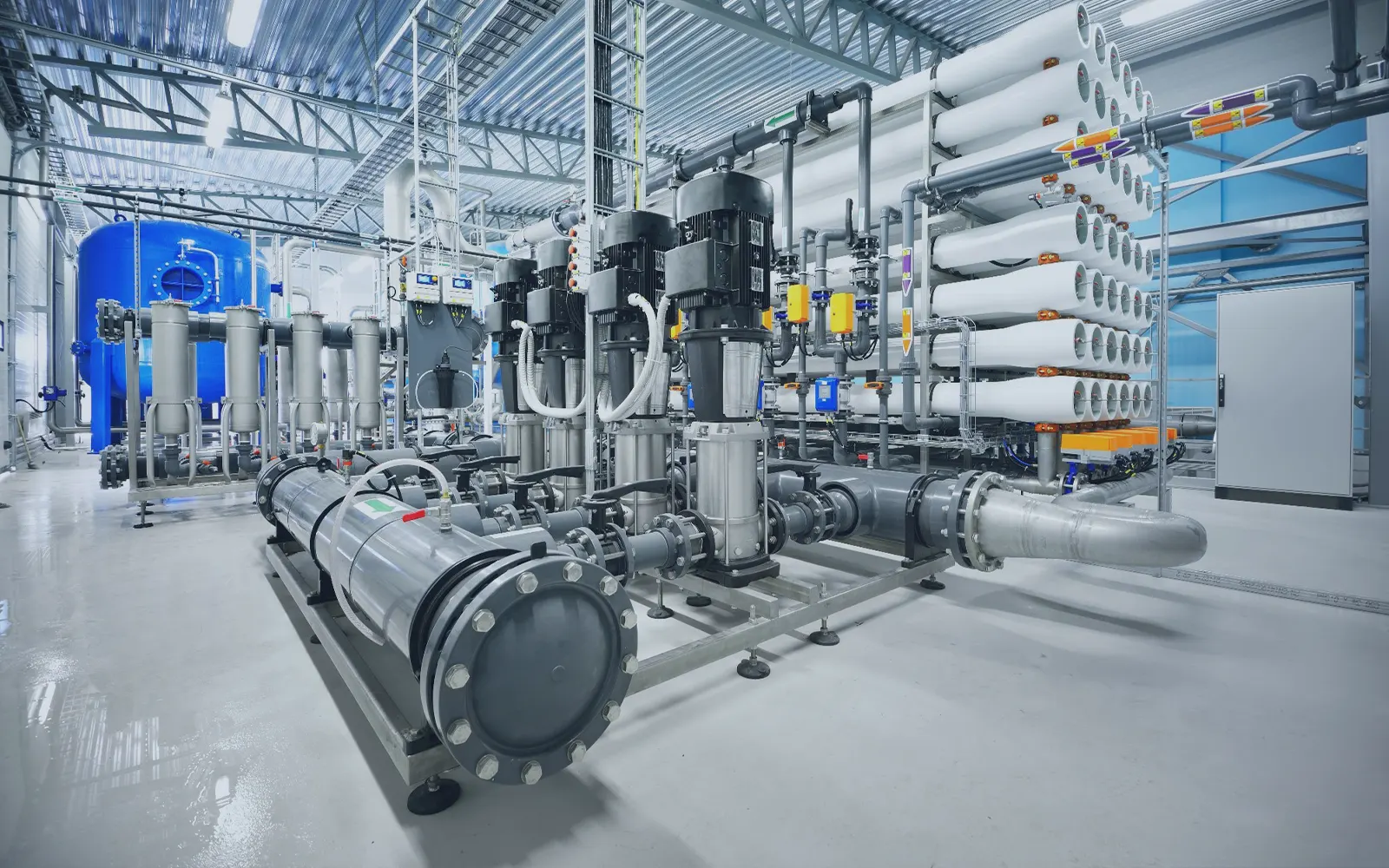
Reverse osmosis (RO) water purification plants for the pharmaceutical industry are advanced water treatment systems designed to remove dissolved salts, microorganisms and unwanted chemicals from raw water sources.
These systems are capable of:
- Removing 95–99% of dissolved salts
- Eliminating more than 99% of bacteria and viruses
- Reducing organic contaminants by up to 99%
The RO system is combined with additional treatment units to reach the required pharmaceutical specifications.
Standards and Regulations Governing Pharmaceutical Water
Water systems in pharmaceutical plants are subject to a set of strict international standards:
| Standard | Regulatory Body | Scope of Application |
| USP | United States Pharmacopeia | Chemical and microbial limits |
| EP | European Pharmacopoeia | Purity and validation |
| WHO | World Health Organization | Global compliance |
| GMP | Good Manufacturing Practice | System design and monitoring |
Failure to comply with these standards may lead to production shutdowns or regulatory penalties.
Egyptian Drug Authority (EDA) Requirements and the Role of Water Purification and Treatment Plants
Pharmaceutical plants in Egypt must apply the requirements of the Egyptian Drug Authority (EDA), which are based primarily on GMP principles and international pharmacopeias such as USP and EP. RO water purification and treatment plants are the cornerstone of meeting these requirements, which include the following:
- Consistent quality of the water produced, without fluctuation
- Full control of the microbial load
- A continuous data monitoring and recording system
- Application of verification and qualification procedures (IQ / OQ / PQ)
- Hygienic design of storage and distribution systems
Typical Configuration of Pharmaceutical Water Purification and Treatment Plants
Core stages of the system:
-
Pretreatment
- Multimedia filters
- Activated carbon filters
- Softening filters
-
Main RO System
- Two stages (Double Pass)
- Reverse osmosis membranes
-
Polishing Units
- Ultraviolet (UV) disinfection unit
- Electrodeionization (EDI) unit
-
Storage and Distribution
- 316L Stainless Steel water tanks
- Closed-loop distribution with continuous circulation
Design Considerations for Pharmaceutical Water Plants
-
Material Selection
All water-contact parts must comply with pharmaceutical specifications:
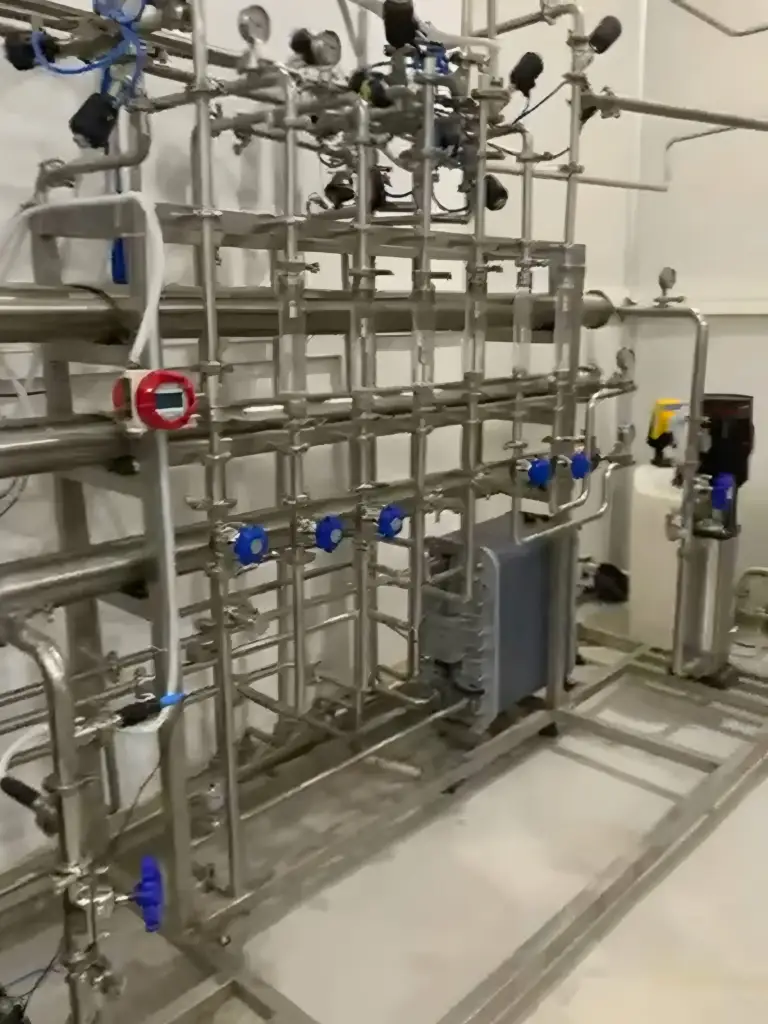
- SS 316L stainless steel
- FDA-approved membranes and seals
- Sanitary connections free of voids or Dead Legs
-
Automation and Monitoring
Modern systems include:
- Full PLC control
- Continuous measurement of both EC and TOC
- Automatic data logging and alarms
These features make inspections and audits easier.
-
Verification and Qualification (Validation)
Pharmaceutical systems require:
- IQ (Installation Qualification)
- OQ (Operational Qualification)
- PQ (Performance Qualification)
These are essential steps to ensure consistent water quality.
Dead Leg and Its Impact on Pharmaceutical Water Quality
The term Dead Leg refers to any section of the piping network where water does not flow regularly, such as unused branches or excessive closed-off lengths. These areas pose a major risk in pharmaceutical water systems because they:
- Allow bacterial growth
- Encourage biofilm formation
- Reduce the effectiveness of periodic sanitization
Branch dimensions and layout should be reviewed against the approved design standard and system-specific assessment, rather than applying a general rule without reviewing the project requirements.
Professionally designed water purification plants help limit this problem through:
- Designing closed distribution loops with continuous flow
- Minimizing unnecessary branches
- Using sanitary fittings
- Improving sanitization and cleaning efficiency
Controlling Dead Legs is not a minor engineering detail but a key element in the success of any pharmaceutical water system and in passing regulatory inspection.
Operational Performance and Efficiency
When properly designed, pharmaceutical water purification and treatment plants deliver highly efficient performance:
- Water Recovery rate: 65–80%
- Continuous operation 24 hours a day
- Precise microbial control after the polishing units
Operating Costs and Life-Cycle Analysis
Although the capital cost of pharmaceutical water purification and treatment plants is relatively higher, they deliver long-term savings.
Average breakdown of operating costs:
| Cost Item | Share |
| Electricity | 30–40% |
| Membrane replacement | 15–20% |
| Consumables and chemicals | 10–15% |
| Maintenance and labor | 15–20% |
| Validation and monitoring | 5–10% |
Common Challenges and Practical Solutions
Key challenges:
- Growth of bacteria and viruses inside distribution loops
- Scaling and fouling of membranes
- Frequent validation requirements
Solutions:
- Chemical / thermal Sanitization
- Pretreatment and cleaning programs
- Reliance on automated monitoring systems
Chemical Sanitization in Pharmaceutical Water Purification and Treatment Plants
Chemical sanitization is widely used in pharmaceutical water purification and treatment plants, especially where thermal sanitization is difficult to apply. Its purpose is to eliminate bacteria and biofilm inside:
- Pipelines
- Storage tanks
- RO and distribution units
Most common chemical sanitizing agents:
- Hydrogen peroxide (H₂O₂)
- Peracetic acid
- Sodium hypochlorite at calculated concentrations
Advantages of Chemical Sanitization:
- High flexibility in application
- Lower cost compared with thermal sanitization
- Suitable for large and complex systems
However, pharmaceutical standards require observing the correct contact time and thoroughly rinsing the system after sanitization, to ensure that no chemical residues remain that could affect water quality or the final product.
Why Are Water Purification and Treatment Plants the Foundation of Pharmaceutical Water Systems?
These plants provide:
- Stable water quality
- Easy future expansion
- Less reliance on chemicals
- Easier documentation and compliance
For this reason, they are the preferred choice in pharmaceutical plants around the world.
Conclusion
RO water purification and treatment plants for the pharmaceutical industry are the cornerstone of product quality, regulatory compliance and operational continuity. By combining advanced technology, precise design and rigorous validation procedures, pharmaceutical manufacturers secure a reliable source of highly purified water while keeping costs under control over the long term.
What Sets Water Purification and Treatment Plants from Alpha Apart:
- 13 years of experience in designing and building plants for diverse water sources, with technical site surveys and comprehensive risk analysis.
- A professional team of elite engineers and experts in water desalination plants
- Partnerships with trusted brands for supplying membranes, pumps and measuring instruments, with manufacturer certificates and warranties.
- Fast implementation and after-sales guarantee with Site Commissioning, an extended warranty and rapid on-site response.
- Technical support and maintenance services through preventive maintenance contracts, 24/7 emergency support, and training of the client’s team in operation and chemical cleaning of membranes.
Contact Us Now
- Call us and get a free consultation
- Or message us on WhatsApp and request a free quote
- Or send your project details by email:
Starting a pharmaceutical water treatment project
Define the intended water uses and identify the team responsible for approving their specifications. Collect the requirements from production, quality and engineering in one brief before comparing equipment. Distinguish confirmed information from estimates and list the questions that must be resolved before a final quotation or installation drawing can be approved. A coordinated pharmaceutical water treatment brief helps the supplier understand the project without receiving conflicting descriptions.
A pharmaceutical water treatment proposal should start from the approved use and requirements, rather than a process name alone. Ask the responsible quality team to identify the applicable reference and water grade, then discuss how the proposed system addresses that need. An RO unit by itself does not establish that the complete system meets every requirement for a particular pharmaceutical application.
Source information for pharmaceutical water treatment
Attach available source-water reports with their dates and sampling locations, and explain whether the source changes or existing treatment is present. For an upgrade, provide the current equipment layout and describe the issue to be addressed. Ask the supplier which information is missing and assign responsibility for obtaining it before the preliminary discussion becomes an equipment recommendation for approval.
Keep sample identities clear so that source-water results are not confused with readings from another stage. When a new report arrives, identify the conditions it represents and ask the specialist whether it changes previous assumptions. Do not replace missing information with an unlabelled estimate. The design basis should remain visible and reviewable by the people responsible for the project.
Demand planning for pharmaceutical water treatment
Collect expected demand from the different users, including timing, peaks and planned expansion. Separate present demand from future needs and explain the available production schedule. Ask the designer to show how the proposal relates to these requirements. Comparing nominal capacities alone does not explain whether two offers assume the same operating hours, interfaces or supporting services.
Give each use point an identifier that can be traced in the drawing and project schedule. Define who reviews a new point or a change in demand so the approved documentation can be updated. A pharmaceutical water treatment demand list allows the teams to discuss generation, storage, distribution and the associated scope together, instead of treating the production unit as the entire project.

Supply boundaries for pharmaceutical water treatment
Request a schedule that distinguishes equipment, services and documents from exclusions and optional items. Identify the agreed supply boundaries and who prepares the work outside them. If proposals differ, ask for the reasons and assumptions before comparing prices. A complete pharmaceutical water treatment response should allow engineering, quality and purchasing to understand the same proposed scope and the activities still assigned to other parties.
Ask which drawings, component information, manuals and records are delivered at each stage. When the supplier proposes an alternative, request documentation of its effect and review it through the facility process before approval. Keep the dated quotation and clarifications together, and identify questions requiring a decision before an order or final delivery programme is confirmed.
Drawing control in pharmaceutical water treatment
Request an up-to-date drawing that identifies equipment, lines, interfaces and the names used in project documents. Review it with the facility teams and define who approves the installation version. If the actual site differs from the information supplied, notify the designer before a field change is made, and retain the decision and revised documents within the project record.
Use clear revision numbers and separate superseded documents from the working version. At handover, check that the documentation describes what was installed and list any remaining differences. The drawing should be accessible when planning a visit, maintenance activity or approved modification. It is a continuing project reference rather than a file that is stored only when the purchase is made.
Document delivery for pharmaceutical water treatment
Prepare a pharmaceutical water treatment document schedule covering equipment identification, specifications, drawings, manuals and agreed test records. Identify the reviewer and delivery stage for each item, including any approval needed before the next activity. This makes the expected handover package clear to both parties and reduces the chance that unresolved document questions accumulate near the end of installation.
Keep pharmaceutical water treatment commercial records separate from inspection records while retaining a clear connection between them. When a document is missing or an equipment identifier differs, create a trackable action with an owner. Receiving a file is not the same as completing its review. Record the question, supplier response and resolution using the facility process so the current project status remains understandable.
Qualification planning for pharmaceutical water treatment
Discuss the inspection and handover plan with quality and engineering before supply. Identify the records the supplier will deliver and which activities belong to the facility or another party. Pharmaceutical-water guidance addresses qualification and system review, while the detailed plan and acceptance criteria must be agreed for the actual project. A list of abbreviations in a marketing offer is not a complete execution plan.
Record open actions and their reviewers before the system is used under the facility procedures. If a check needs repeating or additional evidence is required, identify why, who will respond and when it will be reviewed. The transition between project stages should remain linked to records showing what was checked, what is unresolved and who is authorised to decide the next step.
Operating records for pharmaceutical water treatment
Agree measurement-point definitions and records with the responsible team, using the same identifiers in drawings, forms and reports. Record the time, unit, value, person and comments needed to understand the circumstances. If an instrument is unavailable, show that in the record rather than presenting an estimate as a measurement. Retain relevant calibration and replacement information with the equipment history.
Define who reviews the observations and how follow-up is documented. A report needs context, so connect events with known operating work, maintenance or approved changes where relevant. When records conflict, request clarification from the source and retain the correction through the facility process. The aim is data that the team can interpret and trace, rather than a collection of unexplained numbers.
Team training for pharmaceutical water treatment
Identify the operators and technicians requiring training and describe their responsibilities. Ask for a programme based on the installed equipment and approved documents. Include access to instructions, recording observations, reporting concerns and the limits of each role. Attendance alone does not show what was demonstrated or which questions remain, so record the topics and any required follow-up.
Make the current documents available to people working different shifts and define how they request assistance. Review training needs when equipment or instructions change. Keep the records with the system documentation and identify who maintains them. The responsible facility team should know what must be completed before an individual is assigned work involving operation or monitoring of the system.
Maintenance changes in pharmaceutical water treatment
Base the maintenance plan on the installed components, their instructions and the facility procedures. Record the equipment, reason for work, parts used, findings and reviewer. When an alternative component or modification is proposed, request the required assessment and approval before implementation instead of assuming that a similar name or appearance makes the change equivalent.
Distinguish completion of the physical work from the decision to return the system to use. Discuss the review requirements with quality and engineering and identify the supporting records for the project. Keep changes in the equipment history and update drawings or instructions when required. Future staff should not have to rely on documentation describing a configuration that is no longer installed.
Budget scope for pharmaceutical water treatment
Compare equipment, documentation, agreed inspections, site preparation, installation, training and support as distinct items. Mark exclusions and provisional allowances. Ask for the basis and period covered by operating estimates, using the demand and conditions in the approved brief. A dated project quotation is more useful than applying a general cost percentage to a facility whose requirements have not been confirmed.
Review the effect of changes to demand, documents or test scope before approval. When prices differ, clarify the scope differences rather than comparing totals alone. Keep a list of decisions, owners and required dates, updating it when new information arrives. This connects the purchasing decision to the technical scope reviewed by the facility rather than an older version of the proposal.
Requesting a pharmaceutical water treatment proposal
Prepare the intended use, source analysis, demand, interfaces, available space and document requirements. Explain whether the project is new or modifies an existing system, and identify the information requiring a site review. Send one coordinated brief and nominate a contact who can gather questions from quality, engineering and purchasing throughout the proposal process.
You can begin through the ALPHA Environmental website and request a list of missing information and next steps. Retain the enquiry and responses with their dates, asking for an updated quotation when requirements change. The responsible facility team approves water specifications, acceptance and use against the references and procedures applicable to its project.
References for the project review
Consult the EMA guidance on water for pharmaceutical use and WHO guidance on pharmaceutical water with the responsible quality team when identifying the references relevant to your project.