
Article contents
Sewage Treatment Plants – A Complete and Clear Guide
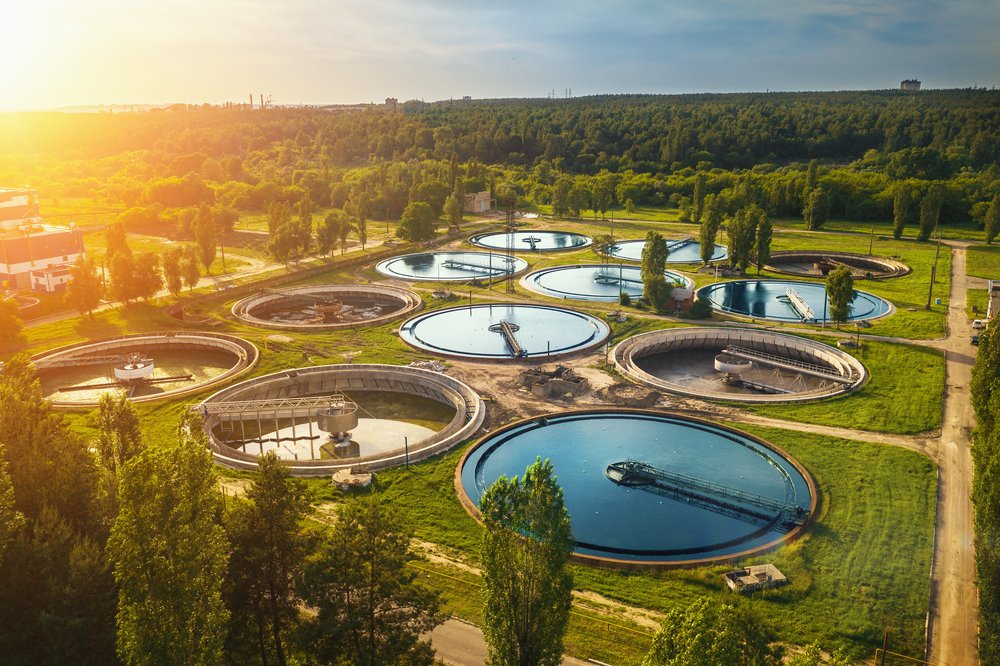
If you are thinking of buying a sewage treatment plant, this guide gives you the full picture so you can decide with confidence. We outline the challenges, then explain how sewage treatment plants can be the practical, direct solution, especially for agricultural projects, villages, hotels and resorts.
Sewage Treatment Plants: Why Now
- Per-capita freshwater availability is declining every year in Egypt and the region.
- The risks of sewage.
- BOD from 150 to 400 mg/L.
- COD from 300 to 800 mg/L.
- TSS from 100 to 400 mg/L.
- Reuse has become both an economic option and an environmental necessity.
- The high cost of buying water or drilling wells is pushing many toward self-treatment solutions.
The Core Problems Every Facility Faces, and Why You Need Sewage Treatment Plants
-
Direct health risks
- Untreated sewage carries bacteria and viruses that cause serious diseases.
-
Environmental pollution
- Random disposal increases pollutants in water and contaminates drains and canals.
-
Government regulations
- Most projects are now required to deliver water that meets specifications before discharge or reuse.
-
Water scarcity and rising costs
- Relying on external sources means high and unstable operating costs.
-
Inability to expand
- The absence of professional solutions limits the growth of any project.
How Do Sewage Treatment Plants Solve These Problems?
Well-designed sewage treatment plants turn raw sewage into safe water that can be reused or discharged safely:
- Removal of initial impurities through screening and sedimentation.
- Reduction of organic loads (BOD/COD) using biological technologies such as MBBR, SBR and MBR.
- Nutrient removal when needed.
- Final disinfection with chlorine or ultraviolet (UV) light.
- Sludge treatment so that it becomes stable and easy to dispose of or reuse.
The result: clean, specification-compliant water suitable for irrigating trees and green areas or for non-potable uses.
A Practical Look at the Main Treatment Technologies
- Activated Sludge: effective for medium-sized projects.
- MBBR: best suited to projects with variable loads and small footprints.
- SBR: flexible and can be operated in cycles.
- MBR: very high water quality, but at a higher cost.
- Containerized Units: faster to install and suitable for remote areas or small projects.
Suggested Sewage Treatment Plant Capacities
Choosing the capacity depends on the number of users, average consumption and the type of end use.
-
Very small capacities (5 – 50 m³/day)
- Small farms, rural houses, limited communities.
-
Small capacities (50 – 500 m³/day)
- Small hotels, resorts, small villages, individual agricultural projects.
-
Medium capacities (500 – 2,000 m³/day)
- Residential compounds, expanded villages, large agricultural projects.
-
Large capacities (2,000 – 10,000 m³/day)
- Small cities, urban communities, large complexes.
-
Beyond that
- Major government projects, usually carried out by international companies or consortia.
What Is the Expected Cost?
- Average cost of building sewage treatment plants: between EGP 15,000 – 25,000 per cubic meter/day of design capacity.
- Includes: supply + installation + initial commissioning.
- Operation and maintenance: depends on electricity, chemicals, spare parts and labor wages.
- Standard warranty: one year from handover.
The prices of sewage treatment plants vary according to the required technology, the nature of the site and the environmental specifications required.
How Are Sewage Treatment Plants Designed?
- Sample analysis: BOD, COD, TSS, TN, TP.
- Selecting the appropriate technology.
- Calculating organic and hydraulic loads.
- Determining tank sizes.
- Preparing the PFD and P&ID.
- Preparing a sludge management plan.
Points to Request Before Contracting for Sewage Treatment Plants
- A guarantee of water quality after treatment (for example BOD < 30 mg/L).
- An estimate of electricity consumption.
- A clear operation and maintenance plan.
- The testing period after start-up (usually 30 days).
- Availability of spare parts and fast response to breakdowns.
Common Customer Objections… and How to Answer Them
- “The price is high”
The cost of pollution, fines and buying water is much higher in the long run. - “I don’t have technicians to operate it”
Comprehensive training or an operation and maintenance contract can be requested. - “We will expand in the future”
Modular solutions allow for easy expansion. - “Do sewage treatment plants give off odors?”
Proper design prevents any unwanted odors.
Return on Investment (ROI) from Building Sewage Treatment Plants
- Major savings on the water purchase bill.
- The possibility of using the water for irrigation and landscaping.
- An improved image of the project in front of government authorities.
- Reduced risk of fines and interruptions.
Quick example: a sewage treatment plant with a capacity of 500 m³/day costs approximately EGP 7.5 million. The plant can pay back its cost within several years, depending on the usage pattern and the resulting savings.
How to Choose the Right Company to Build Sewage Treatment Plants
- Visit operating plants the company has built.
- Assess the team’s experience and certifications.
- Compare operating cost, not just the price.
- Make sure an effective maintenance team is available.
- Obtain a clear and detailed technical and financial proposal.
Before Signing a Contract for Sewage Treatment Plants
- Carry out a site visit.
- Write all technical guarantees into the contract.
- A schedule for supply and installation.
- A testing and commissioning plan.
- A training plan for staff.
- Payment and warranty terms.
Conclusion
Sewage treatment plants have become a necessity, not a luxury, whether for farms, hotels, residential projects or others. The right plant provides alternative water, lowers costs and protects the environment.
What Sets Sewage Treatment Plants from Alpha Apart:
- 13 years of experience in designing and building plants, with technical inspections and comprehensive risk analysis.
- A professional team of elite engineers and experts in the field of sewage treatment plants.
- Partnerships with trusted brands for supplying pumps, blowers and measuring instruments, with manufacturer certificates and warranties.
- Fast execution and after-sales warranty with Site Commissioning, an extended warranty and rapid on-site response.
- Technical support and maintenance services: operation and maintenance contracts, 24/7 technical support.
Contact Us Now
- Call us and get a free consultation
- Or message us on WhatsApp and request a free quote
- Or send your project details by email: