
 201114447361


 محطات تحلية مياه الآبار والبلدية


💧 Water Desalination Plant – A Comprehensive Guide to Choosing the Right Plant
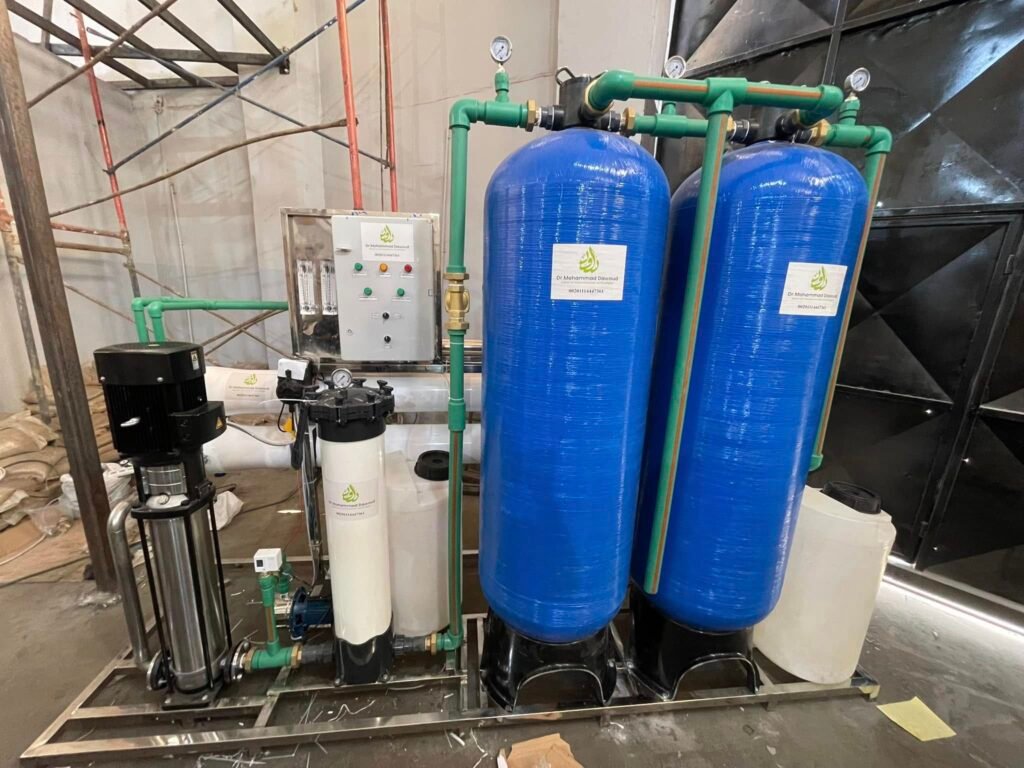
Freshwater resources are dwindling, while demand for drinking, agricultural, and industrial uses is increasing. In this case, an RO (Reverse Osmosis) water desalination plant is the ideal solution for providing a sustainable and reliable water source for various sectors and applications. If you are considering installing a water desalination plant and want to know which one is right for your needs and purposes, you should be aware of several factors that will enable you to choose the design and components that offer the highest levels of reliability and the lowest operating costs.
📄 About Water Desalination Plants and Why They Are Essential Today
An RO water desalination plant is an engineered device designed to remove salts, minerals, and contaminants from seawater, wells, and groundwater to produce water suitable for drinking, agricultural, and industrial uses. Although water covers approximately 70% of the Earth’s surface, less than 1% is potable. Desalination technologies bridge this gap, especially in coastal and desert regions, to provide clean water sustainably.
🎯 How to Choose the Right Water Desalination Plant for Your Needs
1. Determine the Water Source, Salinity, and Intended Use
• What is the source of the water to be desalinated? (Seawater, brackish groundwater, wells, brackish surface water, government-owned water).
• What is the total dissolved solids (TDS) and other water parameters? (Turbidity, iron, manganese, silica, sulfates, bacteria).
• What is the intended use? (Drinking water, agricultural irrigation, industrial, medical or pharmaceutical purposes).
2. Calculate the Required Production Capacity
• Determine the individual or operational daily consumption.
• Multiply this by the actual daily operating hours.
• Add a 15–25% growth and peak capacity allowance.
3. Conduct a Site Inspection and Technical Evaluation
• Test recent water samples and perform a comprehensive analysis.
• Review the available power source (continuous power supply, generator, solar power).
• Develop a plan for water intake and brine removal, and determine the necessary equipment for the desalination plant installation site.
• Verify the installation space, ventilation, accessibility for maintenance, and noise levels.
📶 Key Stages of the Process
1. Pretreatment: Sand and carbon filters (media), cartridge filters (microns), and an anti-scaling system.
2. Main Unit: RO membranes inside RO vessels (households) with high-pressure pumps.
3. Measurement and Control: Manual/automatic operation and monitoring of the plant’s components.
4. Posttreatment: Final sterilization (chlorine/UV).
🏭 Sectors Served by Water Desalination Plants
• Maritime Sector: Ships and vessels – Oil and gas platforms
• Coastal Sector: Hotels and resorts – Power plants
• Livestock Sector: Poultry and livestock farms – Fish farms
• Pharmaceutical Sector: Drug and cosmetics factories – Laboratories and workshops
• Industrial Sector: Various food, chemical, engineering, and metal industries…
• Medical Sector: Hospitals – Dialysis centers
• Agricultural Sector: Farmland – Nurseries – Greenhouses
💡 Tips for Accurately Budgeting a Desalination Plant
• Precisely define the required specifications for the desalinated water to avoid unnecessary expenses.
• Request price quotes from companies and compare them based on components, brands, and warranties, not just price.
• Request a breakdown of the annual energy and operating costs.
Get your station started now!
- Call us for a free consultation
- Or message us on WhatsApp for a free quote
- Or email us your project details